

How To Repair Gelcoat In Cold Weather
How to Repair a Sun Damaged Fiberglass Canoe
Fiberglass canoes are susceptable to dominicus-damage if stored in direct sunlight. The gunkhole'due south gelcoat and fifty-fifty the hull and underlying structure may be damaged from prolonged exposure. Depending on the extent of the damage there are a couple of ways to arroyo the repair.
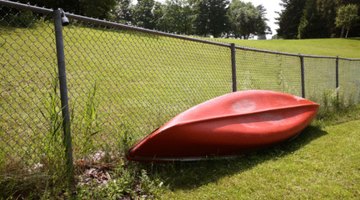
Leaving a fiberglass canoe in the sun tin can impairment the hull.
- Gelcoat and catalyst
- High-gloss additive and colour pigment
- Small disposable mixing bucket and stirrer
- Acetone
- Styrene
- Brushes or paint sprayer
- Fine sixty, 200, 400 and thou grit wet/dry sandpaper and fine steel wool
- Orbital and disk sander
- Buffer and pads
- Soft cloths
- Fine rubbing compound
- S-glass fiberglass cloth, 3 ounce
- Fiberglass resin
- Fiberglass spreader and heavy pair of scissors
- Spray-on bedliner
- Nylon reinforced tape and plastic sheeting
Repairing the gelcoat itself can restore the terminate and protect from further impairment. Calculation another layer of fiberglass can strengthen and add years to the life of an older boat.
Gelcoat Repair
-
Clean the hull with acetone if you lot are only repairing the gelcoat to remove any clay, wax, grease or oils. Sand the hull smooth with 200, then 400 grit sandpaper. Wipe down the hull again with acetone, then with styrene to actuate the old gelcoat and set it for a new gelcoat.
-
Mix the gelcoat and catalyst mix and stir in the manufacturer recommended amount of pigment to attain the color y'all want. Apply the aforementioned measurements of gelcoat, catalyst and drops of pigment to get a consistent color.
-
Sparse the mix with the high-gloss additive if yous use a sprayer. Pigment the gelcoat in thin layers over the hull if using a castor. Don't mix more than than y'all can apply earlier it sets upwardly and hardens.
-
Allow the gelcoat to cure for four hours between coats. The gelcoat should be slightly sticky when applying the next coat. Once you've practical iii coats, allow the gelcoat to cure overnight until hard.
-
Sand the hull lightly with the orbital sander and one thousand grit sandpaper and very fine steel wool until the surface has a dull luster to information technology. Dry the surface with a clean dry textile, and then wipe it downward with rubbing compound. As the rubbing compound dries, buff it till the swirl marks disappear.
Fiberglass Repair
-
Clean the hull with acetone and wipe down with styrene to soften the gelcoat. Sand with 60 grit sandpaper using the orbital sander until polish. Mix upwards the fiberglass resin and catalyst according to the manufacturer'southward instructions.
-
Cut the fiberglass cloth to fit over the hull in a unmarried piece. Paint the hull 1 section at a time, laying the fiberglass on top of the fresh resin. Brush on a 2d coat of resin over the height of the fiberglass.
-
Smooth the fiberglass material and resin coat with the fiberglass resin until it lays flat. Use the scissors to trim excess every bit you lay the fiberglass, Overlap the edges of the canoe with fiberglass for an inch or so to allow for shrinkage every bit the gel sets up. Allow to cure overnight.
-
Sand away any excess fiberglass with the disk sander one time information technology has set up up and hardened.
-
Use gelcoat following the instructions to a higher place, then sand and wax the boat to protect it from further dominicus damage.
Bed-Liner Repair
-
Clean the hull with acetone, then wipe downwards with styrene to soften the gelcoat and promote bonding.
-
Take the canoe to a shop that applies spray on bedliners. Tape the hardware and gunwales with nylon reinforced record and plastic sail to protect from overspray.
-
Spray on the bedliner over the hull of the canoe. The spray gun that the vendor uses mixes the ii office solution equally information technology sprays on. The bedliner fabric will adhere to the hull and dry very quickly.
-
Remove the tape while the bedliner textile is still wet in order to preserve a crisp edge and then you won't take to cut the record abroad if the bedliner dries offset.
-
Cure the bedliner co-ordinate to manufacturer instructions before using the boat. No further coating is necessary every bit the material will dry to a shiny end and volition strengthen a weakened hull significantly, although the process adds virtually every bit much weight to the boat as an extra layer of fiberglass.
Tip
Cover the boat when storing or store within out of the weather. If the hull is badly weakened recoating the gelcoat may not be enough to make the gunkhole usable. A layer of fiberglass or spray-on bedliner material can strengthen the gunkhole and give yous several more years of use.
Warning
Applying a layer of fiberglass tin can add 20 to 40 pounds to the weight of the boat and reduce the carrying capacity of the boat. Covering with the bedliner tin add together nigh as much weight.

Source: https://homesteady.com/12416521/how-to-repair-a-sun-damaged-fiberglass-canoe
Posted by: byrdbefer1969.blogspot.com
0 Response to "How To Repair Gelcoat In Cold Weather"
Post a Comment